
Have you ever been scrolling through social media and stumbled on a video that made you think, “What on earth is this?” If the answer is yes, you’re not alone. And that feeling of weirdness you had was probably more than justified. If your answer is still no, you’re lucky. But we suggest you read this article anyway, so you’ll be ready when it happens (because yes, unfortunately, it will).
We’re right in the middle of what experts are calling “brain rot” – a trend born on TikTok thanks to a few Italian creators, which literally means “cerebral decay” and risks driving millions of users over the edge, especially Gen Z and Gen Alpha. You spell it “brain rot”, you read it as “are we sure our relationship with social media is healthy?”.
We’re not so sure. And since we work with social media every day, we almost feel a responsibility to tell you what’s going on. But to what end?
More than dragging you into this phenomenon – from which it’s probably better to keep some distance – our goal is to warn you about the potential dangers of consuming social media in “brain-off” mode: an increasingly strong temptation that can take over anyone with a smartphone, including us.
Source: Oxford University Press.
What is brain rot: meaning and definition
According to Treccani, which recorded the neologism at the beginning of 2025, the definition of *brain rot* is: “The intellectual and psychological deterioration that would result from a continuous and excessive consumption of online content considered trivial and not very demanding.”
In December last year, the Oxford Dictionary officially declared “brain rot” as the 2024 Word of the Year, after an analysis that found a 230% increase in the use of this term between 2023 and 2024. A figure that becomes even more interesting if we consider that only in 2025 does brain rot truly explode, with an almost exponential rise in usage.
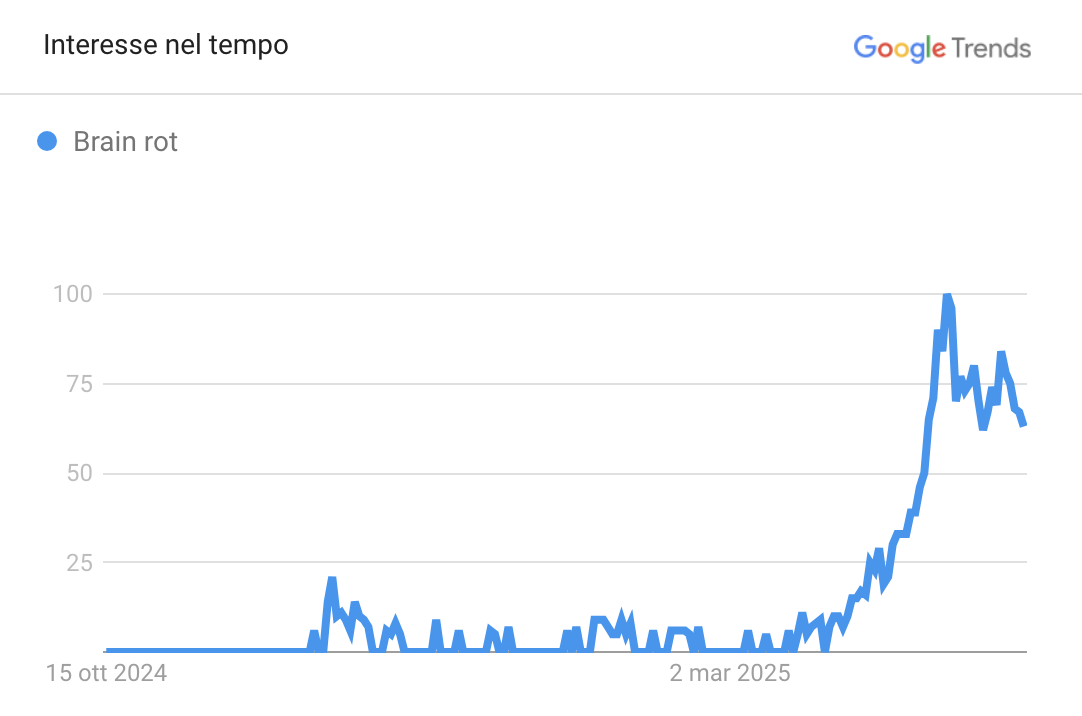
The growth in Google searches for the keyword “brain rot”. Google Trends data, October 2024 – May 2025.
The linguists involved in the choice of “brain rot” as word of the year also point out that the term can refer both to the cause – low-quality digital content often created with AI – and to the effect – the cognitive decline of those who consume it.
Origin of the term brain rot
Contrary to what you might think, however, the term did not originate in the digital age. So brain rot is not inherently a social media phenomenon, but with the rise of social networks and new generative AI tools, it has grown out of all proportion.
The first documented occurrence dates all the way back to 1854, when American writer and philosopher Henry David Thoreau used it in his famous book “Walden”, known in Italian as “Walden ovvero Vita nei boschi“.
In the text, Thoreau criticises society’s tendency to prefer simple ideas over complex ones, writing: “While England endeavors to cure the potato-rot, will not some one endeavor to cure the brain-rot, which prevails so much more widely and fatally?”

Source: QuoteFancy.
It’s striking to think that these words were written over 170 years ago, considering how many potentially harmful phenomena for the brain have emerged since then, social media included. Who knows what Thoreau would think today if he were our contemporary and could “meet”, as we’re about to, the most famous Italian brain rot characters of 2025.
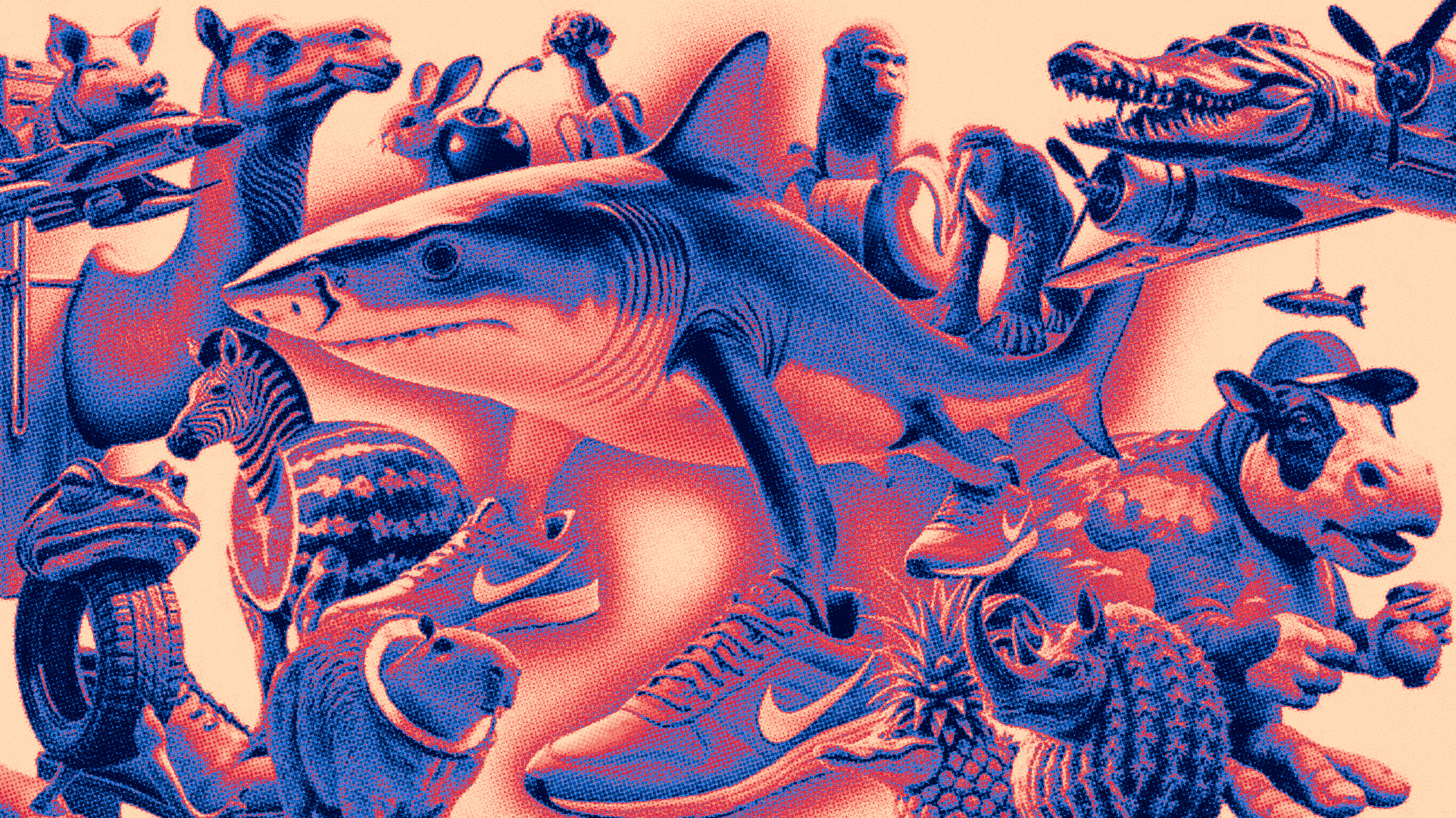
How does Bombardiro Coccodrillo go? Tralalero Tralalà
What kind of title is that!? Are we slowly losing our minds too? Maybe yes – diving into research on this topic has definitely not been soothing – but **these words were not chosen at random**.
In fact, “Bombardiro Crocodilo” and “Tralallero Trallallà” are the names of two of the very first characters born out of the brain rot movement, and also two of the most famous ones, not just in Italy – where they were created and grew – but worldwide, where they now seem to have captivated a good slice of Gen Z (1997–2009) and Gen Alpha (2010–2025).
Why do brain rot characters grab so much attention?
So what’s so special about these characters? How did they manage to win over so many users? The answer isn’t straightforward.
Maybe it’s the curiosity sparked by an aesthetic of the absurd (they’re basically hybrids between anthropomorphic animals and everyday objects); or the roughly Italian-sounding names of brain rot characters (“Ballerina Cappuccina”, for instance); or the robotic, hypnotic AI-generated voice (in 99% of cases, that of the fictional avatar “Adam” from Eleven Labs) reciting nonsensical and often blasphemous rhyming chants.
Or perhaps it’s the eerie backing track (which you can find in two seconds by searching “scary song” on TikTok), or the basic CapCut “explosion” effect, always triggered at the start of each video, dragging the already low quality of the content even further down.
Most likely, the reason lies in the mix of all these elements. And when brain rot characters start interacting with each other – often in duels and battles – the total cerebral decay is complete.
Here are Bombardiro Crocodilo and Tralalero Tralalà fighting. An unmissable battle, right?
@reaity.ai Bombardiro Crocodilo 🐊 VS Tralalero Tralala 🦈 brainrot #bombardirocrocodilo #tralalerotralalala #aianimation #fyyypppppppppppppp
Brain rot according to creators: quizzes, challenges, ratings
As so often happens, the world of **creators** acts as a **megaphone for social phenomena** that emerge from nowhere like brain rot, squeezing every last drop of potential from them to keep users glued to their content.
So it’s hardly surprising to see some creators – such as @anatoxich, the “king” of “character guessing”, the art of recognizing a character in a few seconds – dedicating their entire profiles to brain rot content. After all, who wouldn’t recognize a brain rot character in under two seconds just from one tiny detail – like the trademark blue Nikes worn by Tralalero Tralalà the “shark”?
@anatoxich Brainrot animals speedrun tralalerotralala
And why not watch Gerry Scotti rating his favourite brain rot characters?
@loziogerry bombardilo crocodilo sopravvalutato 👎
In South Korea, they even imagine brain rot as a school subject.
@godmorgon609 Tralalero tralala , bombom, crocodelo #전교1등의가르 #광덕고일상 #tralalerotralala #bombombom
Meanwhile, The Jackal show us what an Art History exam in 2050 might look like…
@_the_jackal 1485 la Venere di Botticelli 1888 Campo di girasoli di Van Gogh 2025 Tralalero Tralala #thejackal #tralalerotralala #brainrot
Brain rot gadgets, puppets, t-shirts… and all the merchandising
Like any self-respecting trend, brain rot has triggered a rush for gadgets, puppets, figures, t-shirts, and all kinds of brain rot-themed merchandise.
It’s no surprise, though, that a quick Google search shows that around 90% of the results for “brain rot gadgets” or “brain rot merchandising” come from e-commerce platforms that are anything but ethical, like Temu, Shein and Amazon. Temu, in particular, is pouring millions and millions of dollars into Google Ads. And we’re still surprised?

Were you looking for a puppet of the new king of brain rot, Tung Tung Tung Tung Tung Tung Tung Sahur? We bet you were. Well, here you go:
@overtime Tung Tung Tung Sahur doll before GTA 6 💀 #italianbrainrot #tungtungtung #toys #shoutoutot (via guille.ok23/IG)
♬ Killswitch Lullaby (Sped Up) – The Lonely Tree & Flawed Mangoes
On Amazon you can find brain rot gadgets galore. If you’re really keen, that image is linked directly to the product…
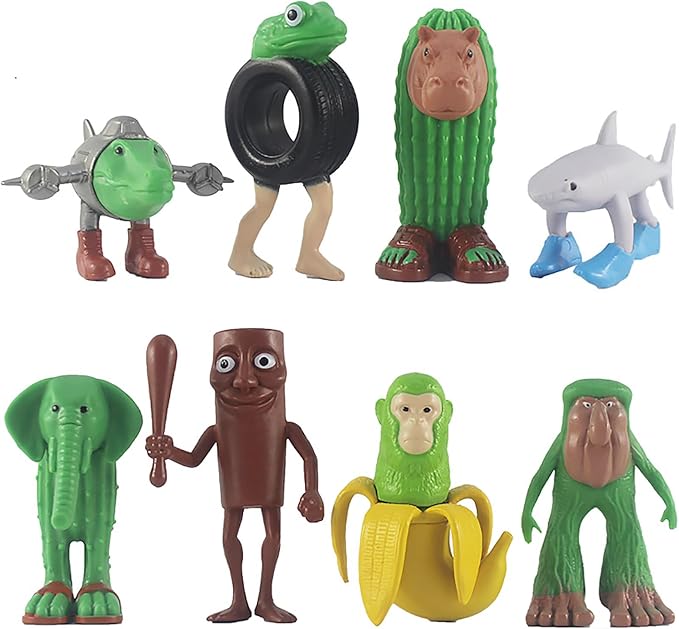
Where is the brain rot trend taking us?
As we write this article, we feel **a strange mix of emotions**, most of them negative: a bit of **disgust**, definitely a lot of **concern**, and a touch of **astonishment** at how widespread the brain rot phenomenon has become, contrary to what we initially thought.
On the other hand, there’s still a bit of hope. We see a small light at the end of the tunnel. We hear a beautiful voice whispering that this will pass, that brain rot is just another trend. It’s a female, almost angelic voice, which reassures us and reminds us that everyone is free to distract themselves however they wish, but that one day we’ll realize that there’s a difference between “taking a break” and “watching meaningless content until our brain rots”.
A voice that has nothing to do with the robotic, sterile tone of the official brain rot narrator, the artificial “Adam”. A name which, perhaps unintentionally or perhaps not, almost suspiciously overlaps with the Adam of Genesis. A robotic version of Adam, created by Eleven Labs, who seems to be the first man to fall into the serpent’s temptation, committing the original sin: lending his voice to a senseless, harmful, dangerous trend that we sincerely hope we’ll grow out of as soon as possible.