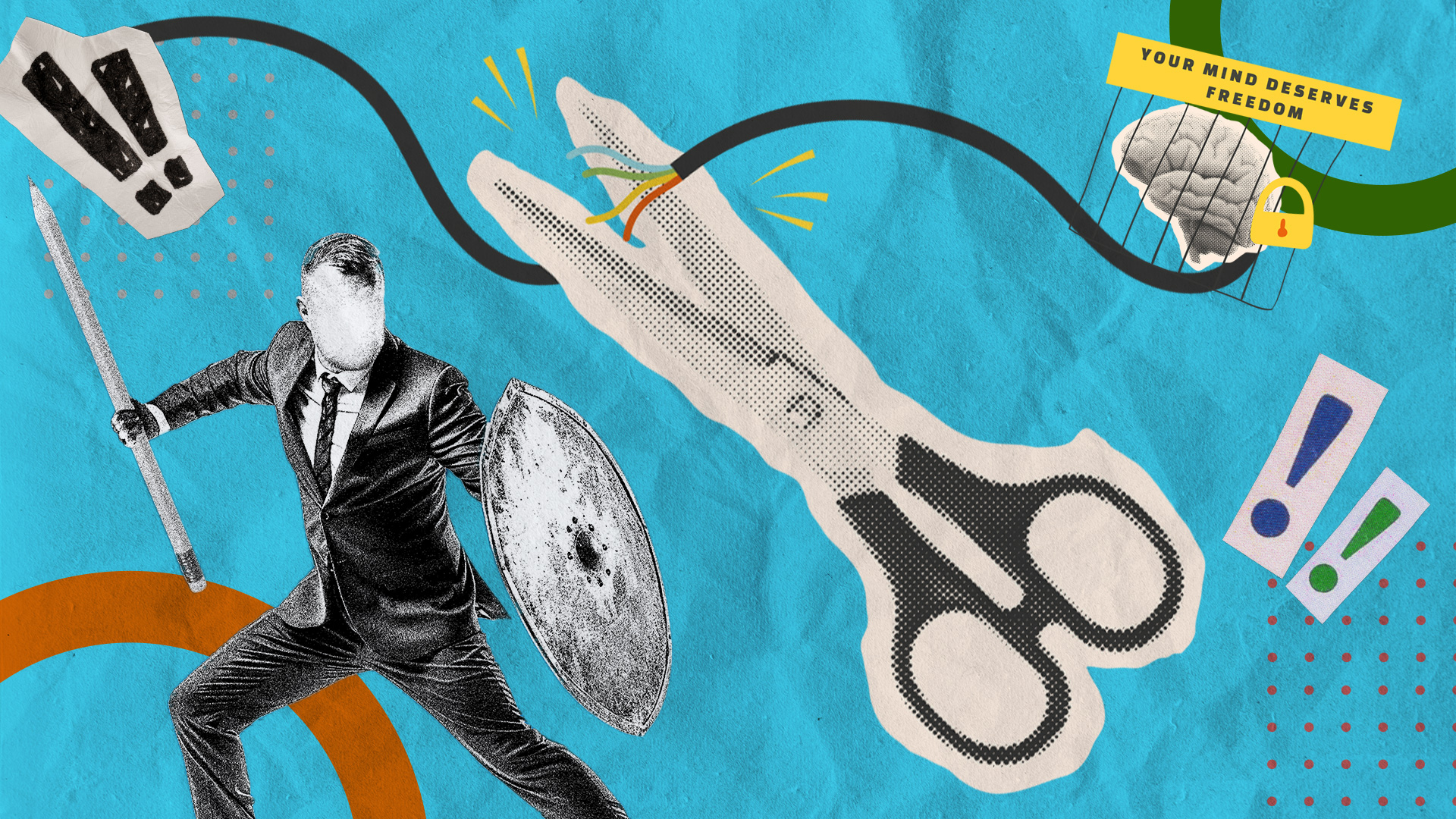

“That screen keeps staring back at me, white, blank, almost mocking me. Frustration builds. The ideas are there, the structure of this piece is already fully formed in my head. And yet, the words won’t come. I let myself get blinded by the chase for novelty at all costs, without noticing that the solution was right there, under my nose, as old as the world itself: storytelling.”
Literally defined as “the art of telling stories” (Cambridge Dictionary), storytelling is one of the most widely used narrative techniques of all time. Because if there’s one thing ancient orators understood long before the TikTok algorithm, it’s that if you can’t tell a story well, you’re just making noise.
Forget fairy tales. Let’s talk about the supercazzola
Let’s get one thing straight right away: storytelling isn’t “once upon a time”. It isn’t the magic of old-world storytellers or the sentimental trick used to make us cry in front of Christmas commercials.
If we want to find the perfect definition of what storytelling really is in pop culture, we have to bring in the great Ugo Tognazzi. Specifically, Count Mascetti and the legendary “supercazzola” in the Italian cult comedy Amici Miei.
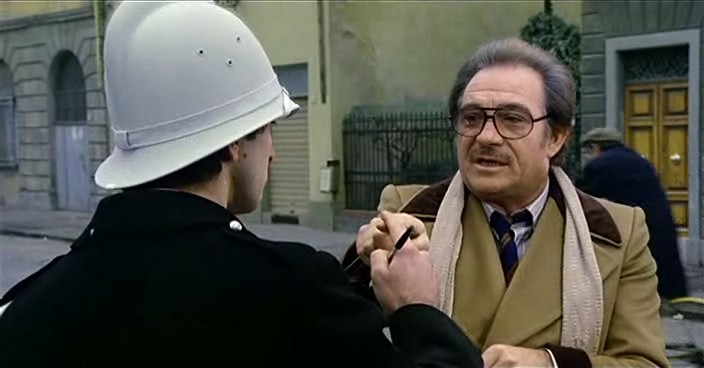
Think about it for a second. What, technically, is a supercazzola prematurata? It’s a flawless formal structure. It has an introduction, an authoritative tone, a driving rhythm and pauses timed to the millisecond. It sounds, in every respect, like a speech dense with meaning. And the poor soul on the receiving end stays hypnotized, nods along, even lets himself get convinced.
And yet the content is literally empty. There’s nothing there.
That’s exactly what storytelling is: the scaffolding. It’s a communication infrastructure so powerful and well-engineered that it keeps you glued to whoever’s speaking, even when in substance they’re saying nothing at all. It’s the absolute triumph of how over what. The definitive proof that if you know how to build the box the right way, whoever’s listening will be more than happy to give you their attention.
From the Agora to the feed: the first copywriters
But if you think this narrative architecture was invented by comedy cinema or modern marketing, you’re wrong, and by quite a margin too. The first people to experiment with this technique were literally walking around in togas and sandals.
It all begins in the Greek Agora, history’s first true “social network” (we’re being provocative, but the parallels are there).
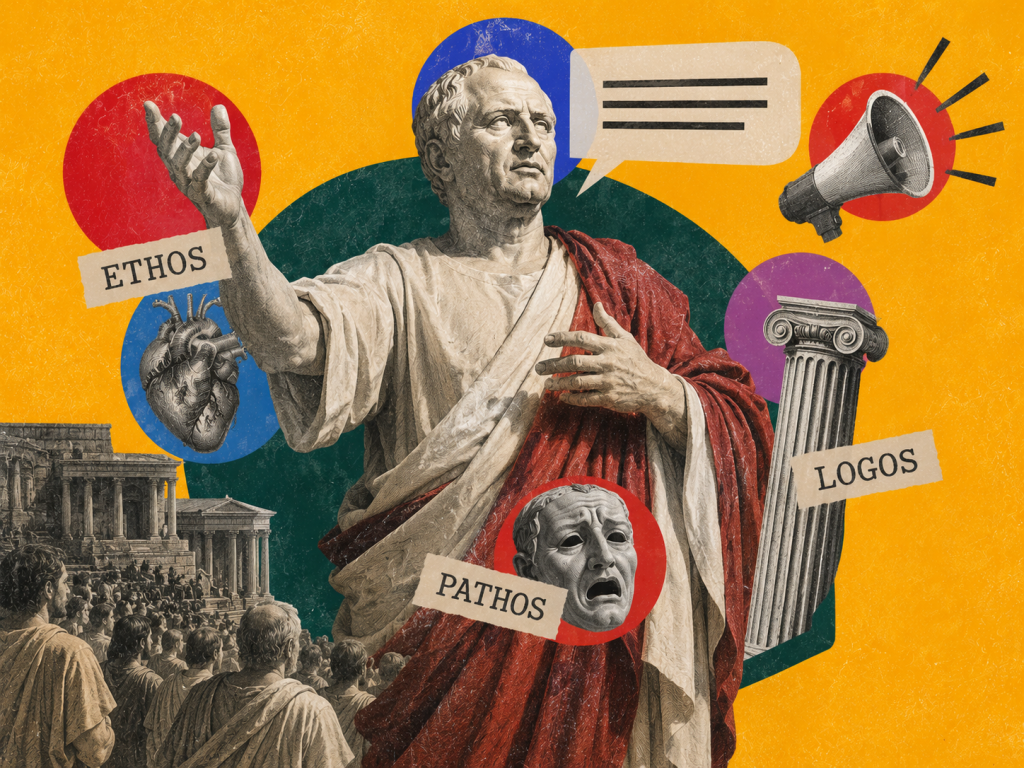
If you wanted your idea to survive, you had to know how to sell it in the public square. This is where Aristotle codifies “Rhetoric“, the ultimate strategy built on the three pillars that still hold up every effective campaign today: Ethos (credibility), Pathos (the emotional hook) and Logos (the logic of facts). Without any one of these three pillars, the story is just background noise, and it goes unnoticed.
But strategy, on its own, isn’t enough. Execution was needed too.
The perfect heirs of the classical Greeks, the Romans, understood this perfectly well, through Oratory. Cicero knew that a monotonous speech in the Forum was the fastest way to get ignored by the crowd.
They studied Actio: rhythm, pauses, gesture. They knew that how you say something determines whether the person in front of you keeps listening or moves on.
Devices change, we go from stone to pixels, but the rules for not getting “skipped” have stayed identical for 2,500 years.
Cliffhanger syndrome
Over the centuries, in fact, storytelling has simply packed its bags and moved house, from the agora all the way to digital devices, passing through poems recited from memory and the pages of great novels. Every single time, storytelling has managed to adapt to newer and newer media.
For example, during the nineteenth century, Alexandre Dumas (the elder) published his feuilletons (serialised novels) in instalments in newspapers. The trick? Cut the story off at the moment of maximum tension, what used to be called narrative suspension and today we call the cliffhanger. This way, desperate to find out how it ended, people would buy the paper again the next day. And all this without ever sacrificing quality: those mid-nineteenth-century serialised tales were nothing less than The Three Musketeers and The Count of Monte Cristo, two certified classics that have survived the (frantic) passage of time.
A century later, what does television do? It takes notes, copies a little, and transfers the exact same mechanisms onto a new medium. Think of The Bold and the Beautiful: all those years at grandma’s house watching episodes made of long, blank stares, where the plot advances by a millimetre a week. And yet, it kept millions of viewers glued to the screen.
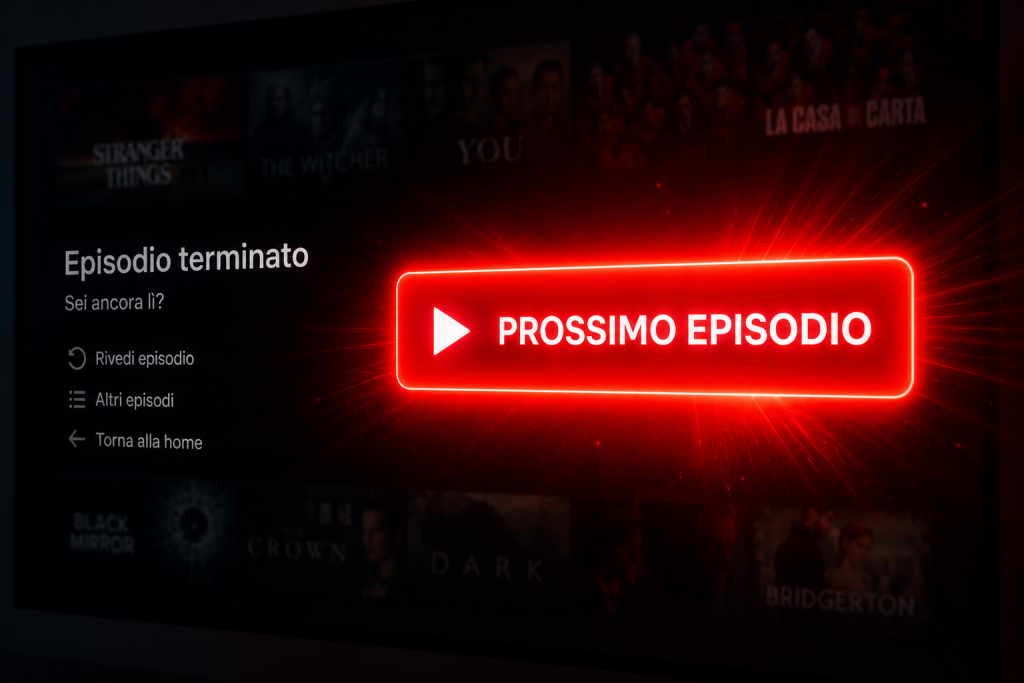
Not to mention Netflix, where everything becomes more intense and cinematic, but the dynamic stays exactly the same. Have you ever noticed how many TV series have entire episodes where absolutely nothing happens? Well, those are effectively empty narrative containers, or rather, containers that stay empty 99% of the time. Episodes surgically designed to carry you to the very last minute, where in the one truly important scene something shocking happens that forces you to click “Next episode“. And we, right on cue, click. Aware, resigned and happy to be played.
The algorithm has a desperate need for stories
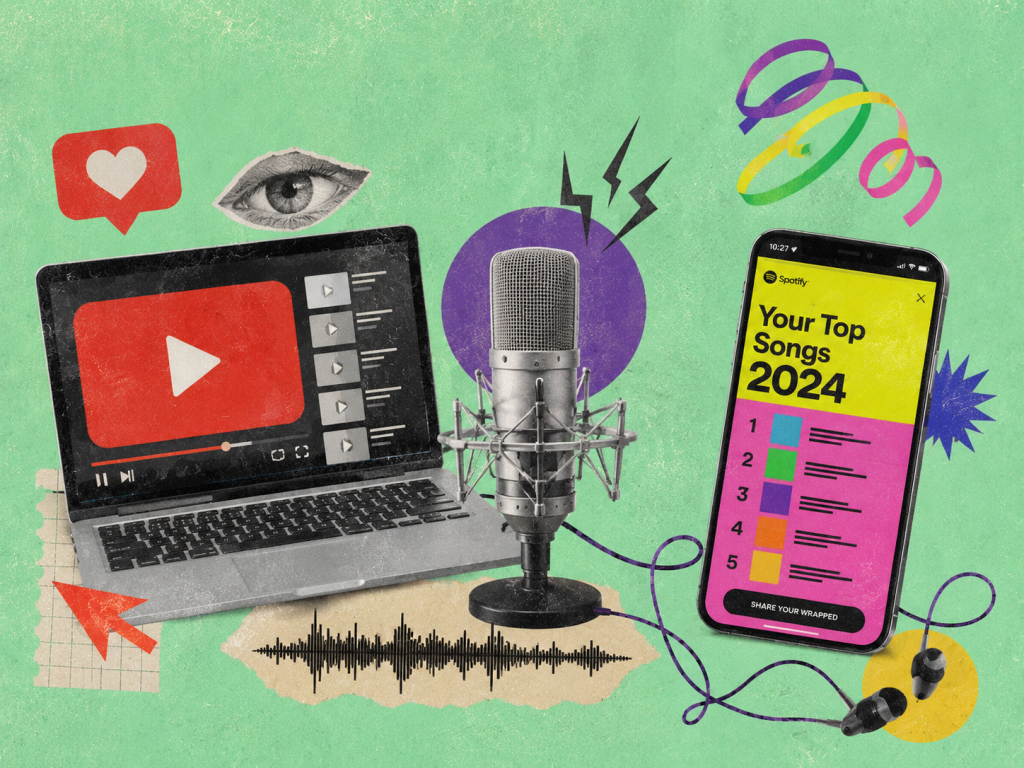
Let’s get to social media, and let’s freely run a quick check on the feed of our favourite social platform. In today’s hyper-connected world, how does this compulsive need to be told a story translate? Essentially, if you think about it, into three narrative strands that fill almost all of our daily digital life.
There’s video storytelling, which grew big thanks to YouTube, and which now tends to strip narration of its flashy special effects to return to the raw power of stories. We can see it in the videos of Giuseppe Bertuccio d’Angelo, known as Progetto Happiness: a creator, a camera and a mission, namely understanding what the word “happiness” means to people living in places extremely far from us. There’s no fiction here, only pure immersion in another person’s journey which, by harnessing the power of storytelling, carries us along in their search for an age-old conflict to resolve (the pursuit of happiness).
There’s then audio storytelling, perhaps the most intimate form of all, and for that reason, the most powerful. A podcast like Elisa True Crime works because it’s essential. It’s just a voice going straight into our ears, capable of recreating tension and atmosphere using nothing but the evocative power of words, voices, music and sound effects. The result? We get chills, we get scared, almost as if we were reliving the crimes being told ourselves.
And finally there’s the absolute masterpiece of our times: data storytelling, the art of turning plain numbers into unmissable stories. Raw numbers, taken on their own, are cold and off-putting. But Spotify, with its annual Wrapped, hit the jackpot: the algorithm chews through millions of flat playback statistics (how many times you looped the same song) and packages them into an epic story where the undisputed hero is you. They literally took cold databases and turned them into an identity narrative that people can’t wait to share. It’s no coincidence that in 2026 the Swedish company also introduced “Party of The Years“ (“Your Spotify Party”), where the milestone of the app’s 20th anniversary ends up, in practice, being celebrated more by you than by the app’s dear and controversial co-founder Daniel Ek, through a box of your (seemingly intimate) musical memories.
Oryzo.ai and the art of (literally) selling nothing
If today we use storytelling to give databases a soul, what awaits us tomorrow?
We can try to make a prediction: digital narrative will become such a powerful, fluid and immersive experience that the product will fade into the background. To the point of becoming almost irrelevant. The ultimate supercazzola.
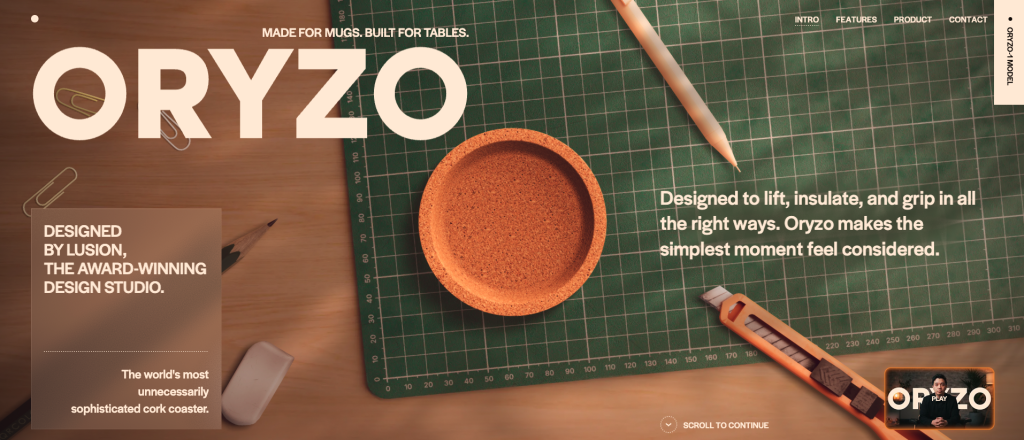
The perfect example is fresh off the press, and comes from a website published in April 2026. Go take a look at Oryzo.ai. At first glance, it looks like the landing page of yet another Silicon Valley startup ready to revolutionise the world with artificial intelligence. Dizzying 3D animations, immersive sound design, copywriting that promises to “elevate your desk’s performance”.