
We’ll explain how (and why) we at Propaganda3 stopped being afraid of artificial intelligence and started putting it to work for us.
Let’s keep it simple: in 2026, anyone working in communications who doesn’t use artificial intelligence is a bit like someone who, back in 2010, said, ‘Social media is just a passing fad.’ Spoiler: it wasn’t. And neither is AI.
But be careful, because the issue is more nuanced than it seems. Using AI doesn’t mean pressing a button and going for a coffee. It means rethinking the way we work, understanding where artificial intelligence excels and where, on the other hand, we excel. We humans, with our crazy ideas, our late-night insights and that unique ability to say, ‘Wait, what if we did the exact opposite?’
Here at Propaganda3, we’ve adopted a clear approach: AI works for us, not in our place. The starting point is always a creative human input. Always. Artificial intelligence comes into play for repetitive tasks – those processes where a well-crafted brief (or prompt) is enough to produce solid results, which are then always (and we emphasise always) reviewed and validated by the team.
Time saved is time reinvested
Time saved is time reinvested
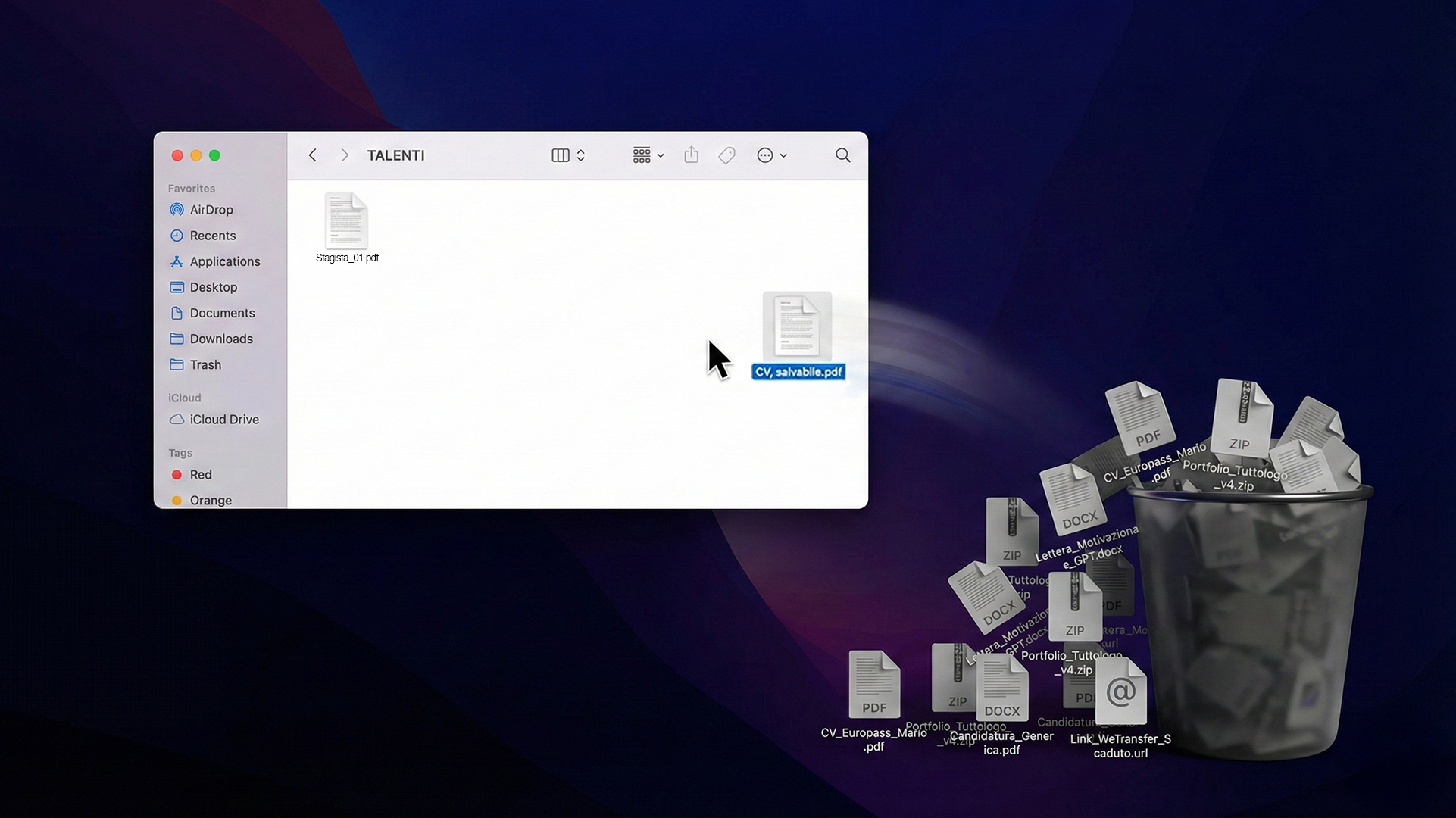
And here’s the interesting bit. Because the result of this approach isn’t ‘working less’. It’s working better. In some projects, we save up to 50% of the time. And we don’t spend that time on Netflix (not during working hours, at least): we reinvest it in creativity.
We use it to perfect a project that’s already good, to develop ideas to be implemented in the coming months, years or decades, and to explore avenues we wouldn’t previously have had time to pursue.
The creative process remains unrestricted, the end result remains flawless, but the actual work gets done significantly faster. It’s like having a tireless assistant who takes care of the day-to-day tasks whilst you focus on the things that, as a human being, you do best: thinking and creating.
AI as a multiplier of ideas
There is another area where AI has become extremely useful to us: the expansion and extension of our creative (and human) ideas. We start with an idea, a well-defined concept, and let artificial intelligence expand it in every possible direction.
With computing power thousands of times greater than that of a human brain, AI can, in a matter of minutes, find links, connections and variations that, yes, we might have found too, but only after days of study and research.
A method which, in our view, radically changes the efficiency of brainstorming, whilst keeping its quality intact.
The real challenge: keeping up
The real challenge: keeping up. At Propaganda3, (almost) all of us use AI. Even those who were a bit more sceptical at first. That’s because we’ve done a huge amount of work to raise awareness internally, share information and keep everyone up to date.
And it is precisely keeping up to date that is the biggest challenge: if I use ChatGPT’s Deep Research for research today, tomorrow there might be a Perplexity update that turns everything on its head. Innovation moves at a pace that renders what was cutting-edge yesterday obsolete in a matter of weeks, or even days.
That’s why we’ve created a horizontal internal sharing system: everyone participates, everyone contributes. We flag up new AIs, LLM updates, new versions… everything. We discuss them periodically and decide together how to use them.
It’s a culture, even before it’s a method. And cultures, as we know, are more resilient than mere guidelines.
Two agencies, a similar view on AI
Speaking of shared values: both Propaganda3 and Personal Event – an agency specialising in events, incentive travel and conventions, with whom we share not only a vision and an office within our Propaganda Factory, but also ownership – have addressed the topic of AI from different perspectives but with an identical philosophy: we do not use AI to stop working, but to improve our work.
At Personal Event, the approach is naturally different from ours: event organisation is still a deeply human activity, where precision is everything and a mistake regarding a flight name or a wrong timetable can have knock-on effects.
This is why their relationship with AI is one of curiosity and caution, a balance that is beautifully described in the first article of Personal e-Mag, the new magazine from Personal Event (which we recommend you read to discover their point of view!).
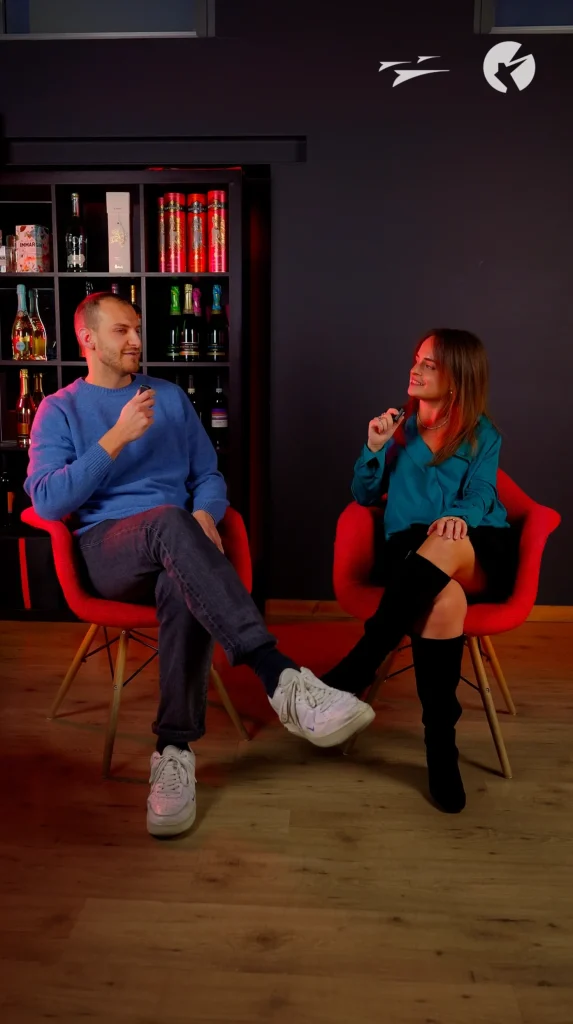
We also discussed this together in a video available on our social media channels: a two-way conversation that shows how two different organisations can find common ground in AI, one built on opportunities and responsibilities.
The responsibility we cannot ignore
And speaking of responsibility: we are fully aware of the potential environmental damage caused by the excessive use of AI. We’re not just saying this for the sake of it; in fact, our more attentive readers will know that a few months ago we published an in-depth article on our MAG, entitled: “AI and what we don’t know about its environmental, ethical and privacy implications”.
That is precisely why we have developed an AI culture that is utilitarian, yet deeply ethical. We use it for the right purposes, in the right way, without wasting time on silly games or pointless chats. No prompts to generate cat memes during working hours (or at least, not too many).
As both Propaganda3 and Personal Event are Benefit Corporations, we all believe in the responsible and mindful use of innovation, with full respect for the environment and people.
In conclusion (but not quite)
Having AI at our disposal is like having a colleague who’s always available and never gets tired – even if (we have to admit) it does use quite a lot of energy. A colleague who helps us free ourselves from repetitive tasks so we can focus on the parts that require our full attention: strategy, creativity, lateral thinking. Everything that makes our work truly our own.
2026 won’t be the year AI replaces people. It will be the year people who use AI in the right way make the difference.
And we, in our own small way, are giving it a go.
Disclaimer: This article was written with the kind support of Claude Opus 4.6, using a customised response style tailored to the tone of voice of Propaganda MAG.